

Shore or boat fishing? Choose the method that suits the trip
A boat does not automatically improve every session, and shore fishing is not merely a step toward real fishing. Choose according to access to the target, presentation, time and equipment.
Ask whether you need to reach another area or understand the nearby area better. A boat solves some access problems, not every fishing problem.
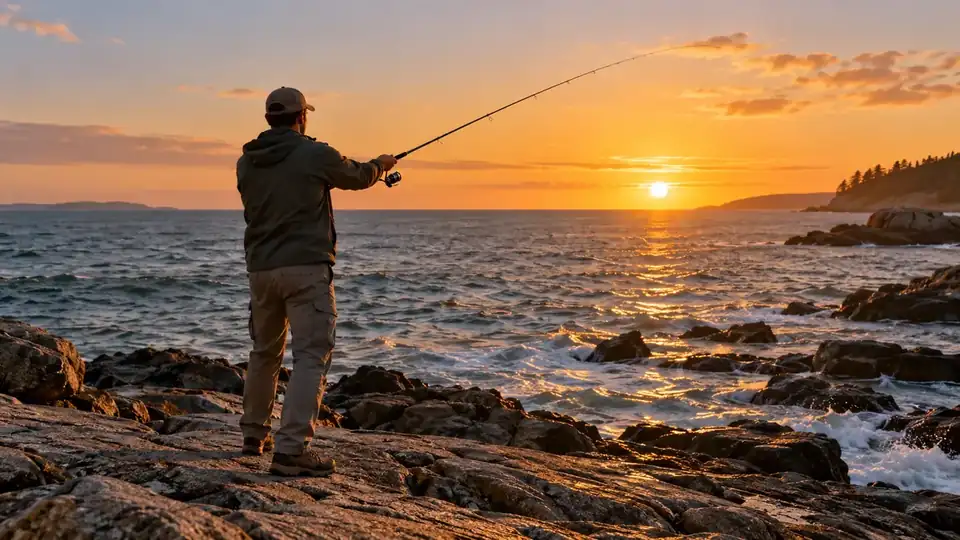
When shore fishing suits the goal
A short session at an allowed, accessible place can teach casting, knots and bait inspection without a full boat trip. Assess footing, surf and the exit route; being on land is not an automatic safety advantage on exposed structures.
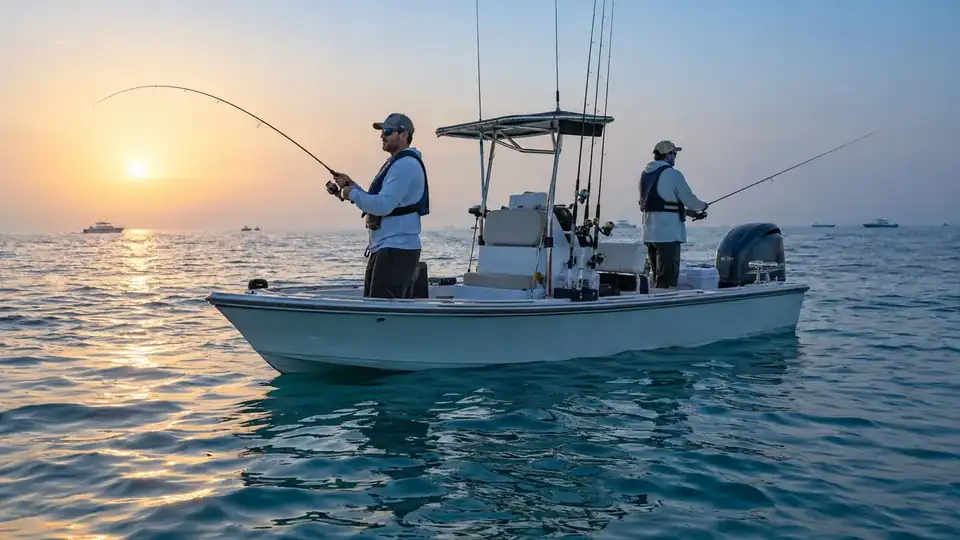
What a boat adds
A boat opens access to deeper or distant ground and methods based on dropping or drifting. It also requires a competent skipper, matched equipment and a return plan. Ask what a trip includes and what passengers must bring rather than assuming the booking covers everything.
Weather can rule out both
No universal wind number makes every boat unsuitable and every shore a good alternative. Hull, route, gusts, wave period and shore exposure all matter. If a boat trip is unsuitable, reassess the shore independently; postponing may be preferable.
Read two scores as planning comparisons
The tool applies different heuristic weights to shore and boat methods. It does not know every vessel or local ledge. Traditional-calendar preferences are separate from current marine conditions and should not determine a booking alone.
Set a specific learning goal
Two hours learning a rig at a familiar suitable shore can be worthwhile. Trying a distant vertical presentation calls for a matched boat trip instead. Define a useful outcome such as a controlled cast or understanding depth, so that the session has value beyond catch size.