

FISHTIDE FIELD GUIDE
Shore or boat? Choose the trip before the score
A sheltered shore mark and an exposed boat route can share a city name and have very different conditions. Start with your method and location.
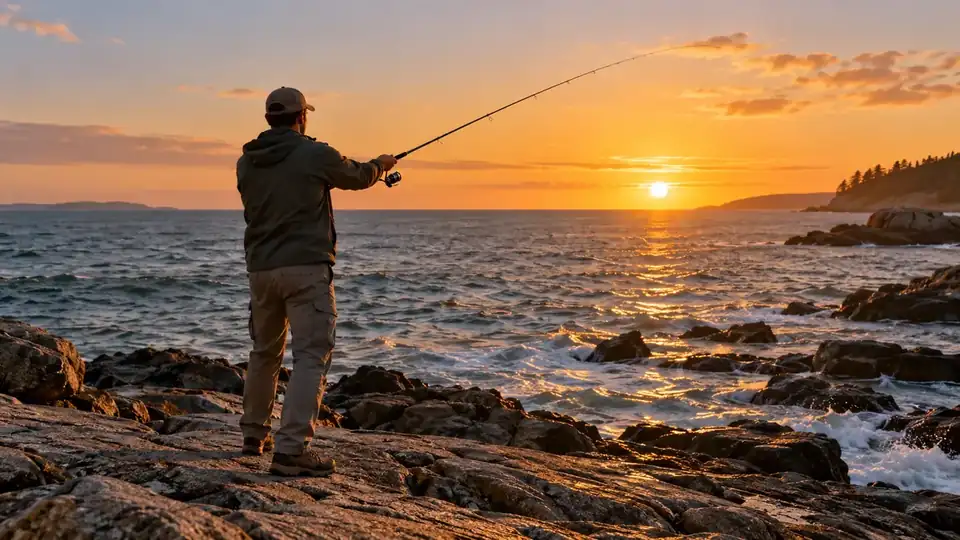
Illustrative image, not an observation of a particular location or sea state.
Name the actual fishing area
A city is a starting point, not a description of the water in front of you. A sheltered bay, an exposed rock ledge and a harbour entrance can be close together but behave differently. Identify the standing position or fishing area, plus the route you will use. Look for coastline orientation, islands and barriers, and check public access and opening times. A map pin does not establish fishing permission or ownership.
For a shore session
Watch the breaking zone, the dry standing area and your exit. A forecast for offshore wave height does not describe the water reaching your feet; seabed shape and wave direction affect the shore. A crosswind can bow the line and reduce bite detection. An offshore wind can make nearby water look calmer, but does not justify going farther out. Make a short test cast from stable ground rather than standing on wet rock to gain distance.
For a boat trip
Check the harbour exit, outward route and return window, not just the fishing mark. Wind can strengthen before your return. Read wave height, period and direction alongside wind and gusts. Similar-length boats can behave differently because of hull design, load and speed. Ask the skipper about the vessel and passengers, and identify an alternative sheltered plan. Lifejackets, appropriate communications and a return plan matter more than pursuing an attractive fishing-time score.
One location, two decisions
Imagine light wind near the beach while swell reaches the exposed part of a boat route. A sheltered shore session may be possible while the boat journey remains uncomfortable or unsuitable. The reverse can also happen: waves may break heavily on a shallow beach while conditions farther offshore differ. This is a reasoning example, not an assessment of a real trip. Do not transfer a shore recommendation to a boat, or judge a whole route from the marina.
Turn the forecast into a short plan
Write down your fishing area, available data, missing information and return time. Missing wave data means unavailable, not zero. Check the forecast issue time. Compare the conditions you actually meet with the forecast, and change plans when necessary. Keeping a short private note about wind direction, line movement and bait can help you learn, without implying the same time will produce fish on every visit.