

Reading fishing weather: wind, waves and pressure in context
A comfortable average wind can hide stronger gusts, and a clear sky does not describe incoming waves. Read the forecast as several pieces of information rather than a sunshine icon.
Start with place and time, then wind, gusts and waves, before interpreting the other fishing factors.
Check the source, update and period
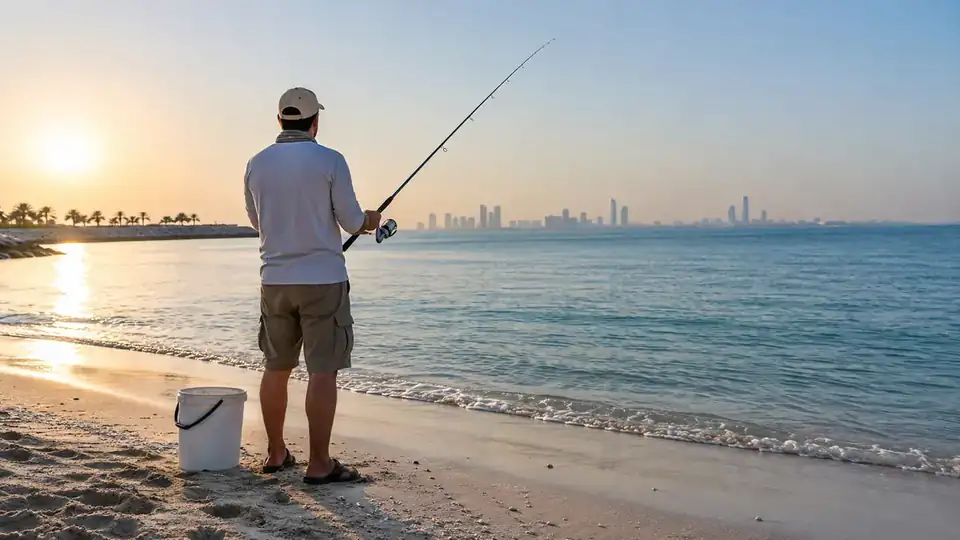
Confirm the location covered and the forecast update time. Review the fishing and return hours, not just current weather. An inland city forecast cannot substitute for local marine guidance, and a daily average may hide a windier evening.
For Kuwait, consult the Kuwait Meteorological Center. Elsewhere, use the relevant official local provider rather than transferring Kuwait's forecast.
Read wind and gusts together
The average describes the broad pattern; gusts describe short increases that can affect balance, casting and boat handling. Direction matters too, but coastline shape, shelter and incoming swell can change what you experience.
From shore, judge whether you can control your line from a safe position. Longer casts are not useful if tackle drifts into obstacles or people enter the casting area. For a boat, do not treat a generic online wind threshold as a substitute for the craft's suitability, the skipper's judgment and official advice.
Waves need their own information
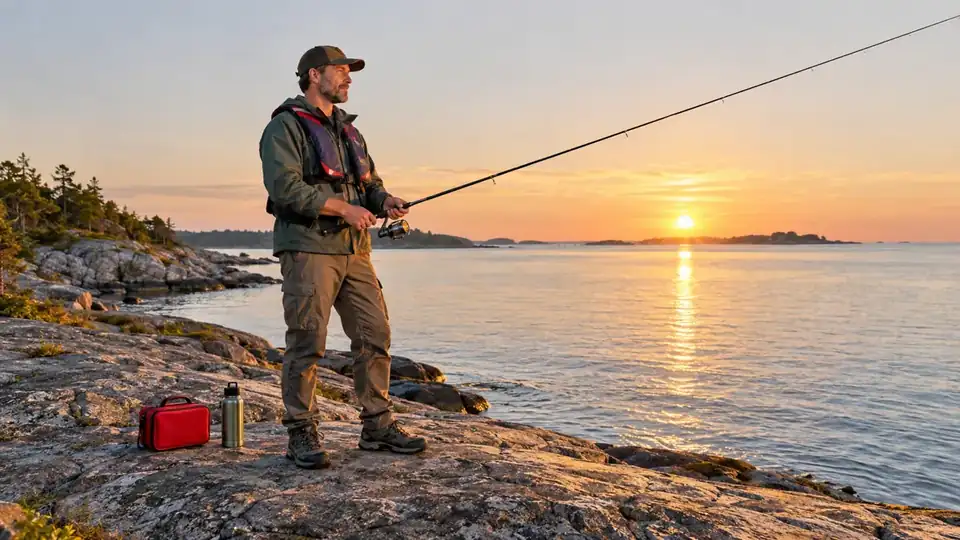
Wave height, period and direction are separate from local wind speed. Light wind at your position does not prove an absence of incoming swell. The tool currently has incomplete wave and marine-warning coverage and does not provide clearance to sail.
Pressure and temperature are context
You can record pressure trends and temperature when comparing trips, but pressure alone does not guarantee a species will feed. Use the chart to understand change rather than treating every fall as a promise of bites.
Also plan your sun exposure, drinking water, clothing and return time. Missing part of a suggested fishing window is preferable to remaining in unsuitable conditions.
Dust, fog and lightning
An absent fog symbol does not establish that there is no dust. The tool displays unavailable when it lacks appropriate dust information. Follow local warnings, and postpone or stop if visibility deteriorates or lightning appears.
What the tool's weather means
- The daily summary aggregates available forecast hours, not live readings from your beach.
- Window ranking uses hourly data when covered; uncovered hours remain uncertain.
- A manual entry belongs to the chosen place and date. Clear it to return to the forecast.
- Missing weather or waves must not be interpreted as excellent conditions.
Before leaving home
- Is there current local guidance and are any warnings active?
- Does the forecast cover your journey, session and return?
- Can you get back if water rises?
- Are clothing, equipment and communications suitable?
- Do you have an alternative location or a clear reason to postpone?
Resolve safety-relevant unknowns before leaving. Continue with the first Kuwait shore trip guide and fishing rules and safety.
Review the return hours first
Read the whole trip interval, not only the arrival hour. Discuss any later change with the skipper for the actual route and vessel. On shore, review exposure and the exit. A fishing score is neither a weather warning nor a departure clearance.
Sources and limitations
Choose the next lesson
This guide has a specific job. Use the related lessons for a different decision rather than reading the same subject as one general forecast.